One menu, two Cuban classics, and one small question: mint or no mint? The choice points towards a Mojito or a Daiquiri. Look closer: the shared ingredients tell one story; the differences, another. Here is how to compare them without assuming one is the only “correct” recipe.
Start with the ingredients
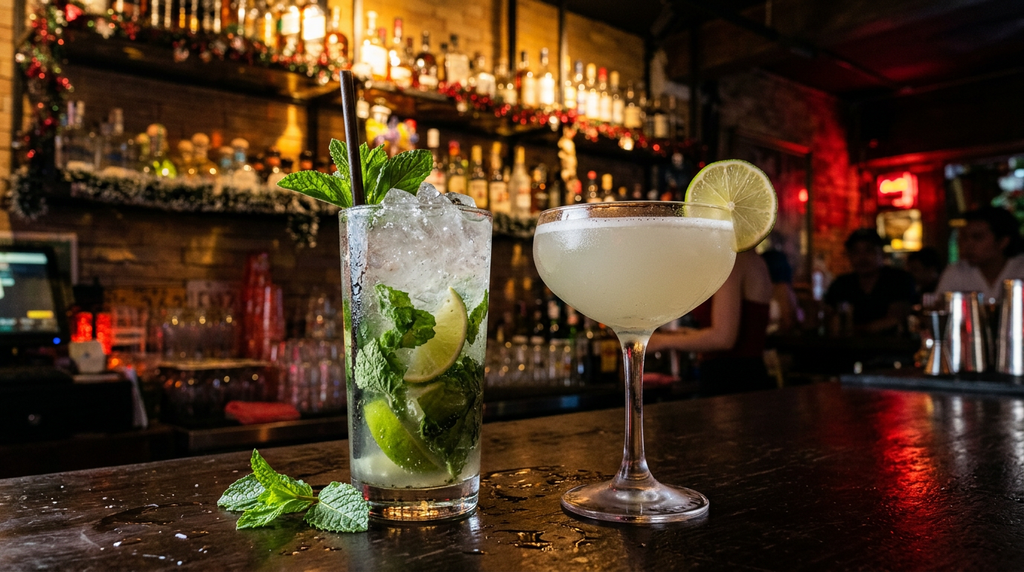
For comparison, use the IBA Mojito recipe and Daiquiri recipe as references. The former combines white Cuban rum, lime juice, mint, cane sugar and soda water. The latter uses white Cuban rum, lime juice and superfine sugar. Both share rum, lime and sweetness; mint and soda distinguish the Mojito, while the Daiquiri keeps the IBA formula spare. Related, yes. Interchangeable, no.
Those ingredients point in different directions. Mint and soda bring freshness and lift to the IBA Mojito. The IBA Daiquiri keeps rum, lime and sugar at the centre. Which sounds more your style: mint and bubbles, or a shorter list built around rum and citrus? These are reference recipes, not claims about the taste of Cuba Libre’s own drinks.
A Cuban cocktail culture, not just two famous drinks
The Mojito and Daiquiri are two well-known entries in a larger Cuban cocktail story. The Mob Museum’s account of Cuban cocktail culture describes cantineros adapting drinks to their customers. The Club de Cantineros formed in 1924 and published a Cuban drinks guide in 1930, listing dozens of cocktails; rum appeared in about half. During U.S. Prohibition, American bartenders and tourists travelled to Cuba, contributing to the island’s cocktail scene. The history, then, is also one of exchange.
That context changes how to read a cocktail list. A classic can travel through bartenders and written recipes, then take on local interpretations. Comparing ingredients helps reveal those differences without assuming every bar follows one universal formula.
What Cuba Libre lists today
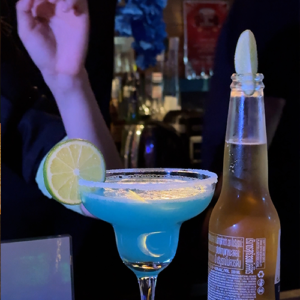
Both are on Cuba Libre’s current menu. Its CLASSIC MOJITO lists rum, sweet & sour, mint leaf, lime wedge and sugar cane. The CLASSIC DAIQUIRI lists rum, triple sec, lime juice, sweet & sour and sugar syrup. These are the bar’s listed versions, not identical to IBA reference recipes. Comparing the ingredients reveals what the names share and how the drinks differ.
Look at the menu: count the ingredients both drinks share, spot what differs, then choose the description that sounds more like your preference. For the latest details, check Cuba Libre’s current drinks menu.
So, Mojito or Daiquiri?
If mint and soda sound appealing, use the IBA Mojito as a reference. If you prefer the compact rum-lime-sugar formula, compare it with the IBA Daiquiri. Cuba Libre’s listed versions have their own ingredient details, so read the current menu rather than assuming every bar follows the same recipe.
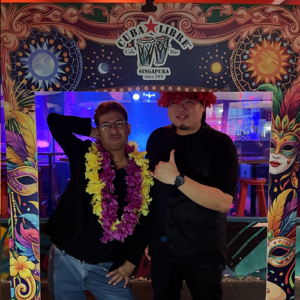
Either choice can lead into a bigger conversation about Cuban cocktails and how bartenders interpret classics. Explore the Cuba Libre experience in Clarke Quay, browse the drinks list, and reserve a table if you would like to compare the two.
 COCKTAILS & More